Document automation for financial services
Automate, structure, and improve how financial documents are created, reviewed, and managed.
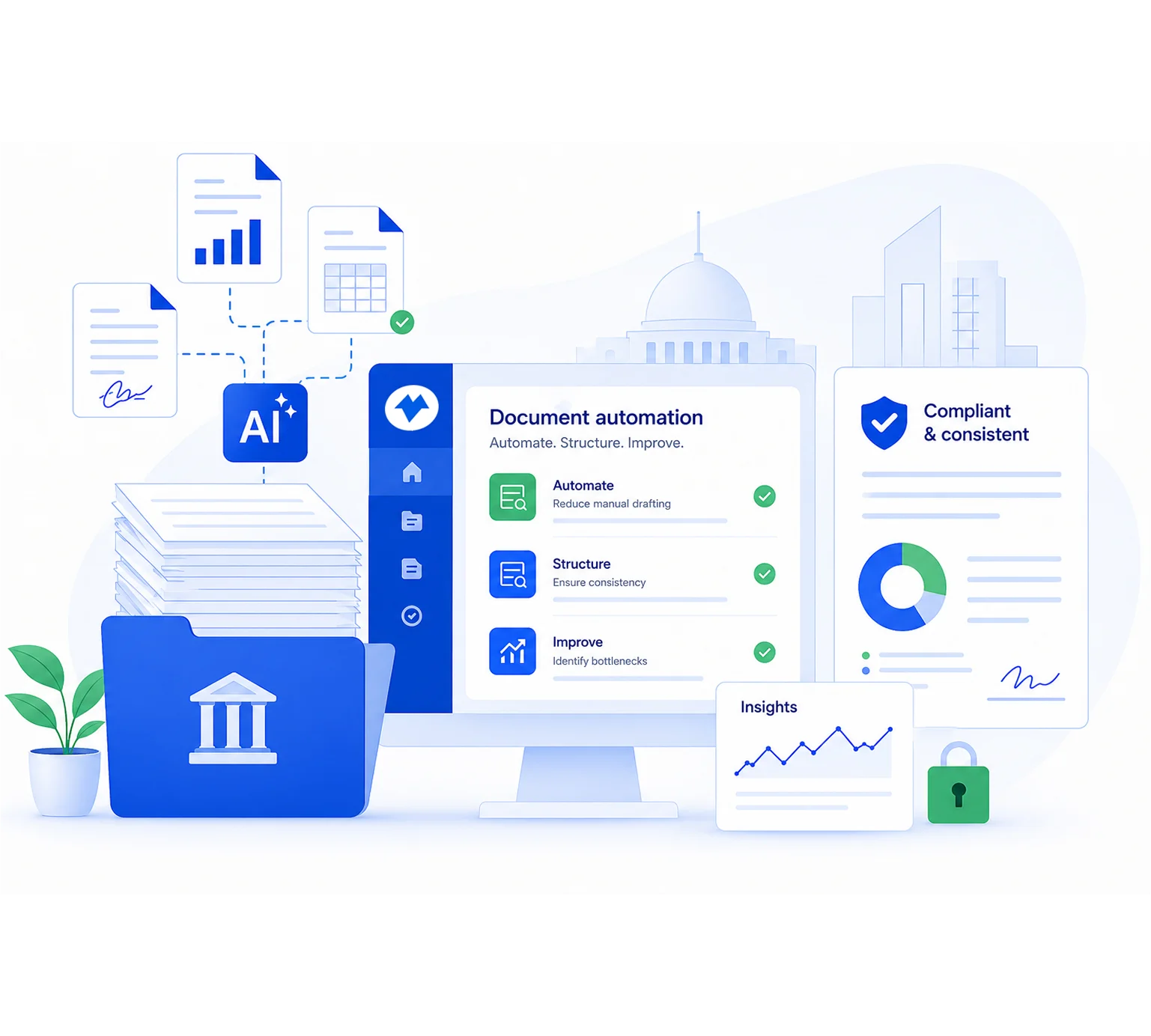
Whitefox.cloud builds AI-powered document automation systems for financial services teams that work with complex, regulated, document-heavy workflows. We help financial advice firms, wealth managers, fintech platforms, and financial services organisations reduce manual drafting, improve document consistency, and identify where document work actually slows teams down.
Intro
Financial document automation with AI, built around real workflows
Most document automation tools help teams fill templates faster.
That can be useful, but it rarely solves the deeper problem inside financial services documentation. Advice documents, review documents, fund reports, disclosures, onboarding packs, and compliance files: they are structured, regulated, and connected to client data, advice logic, internal policies, and review workflows.
- Generate structured document sections from approved data and context
- Extract and organise information from PDFs, forms, notes, and internal systems
- Apply business rules, disclaimers, and review logic during document creation
- Identify inconsistent wording, missing context, or weak links between recommendations and client circumstances
- Analyse which sections take the most time and where users repeatedly get stuck

The result is a smarter financial document automation system that helps teams improve the way documents are produced over time.
What we solve
The real problem with financial services documentation
Financial documents usually become difficult for 4 reasons.
01
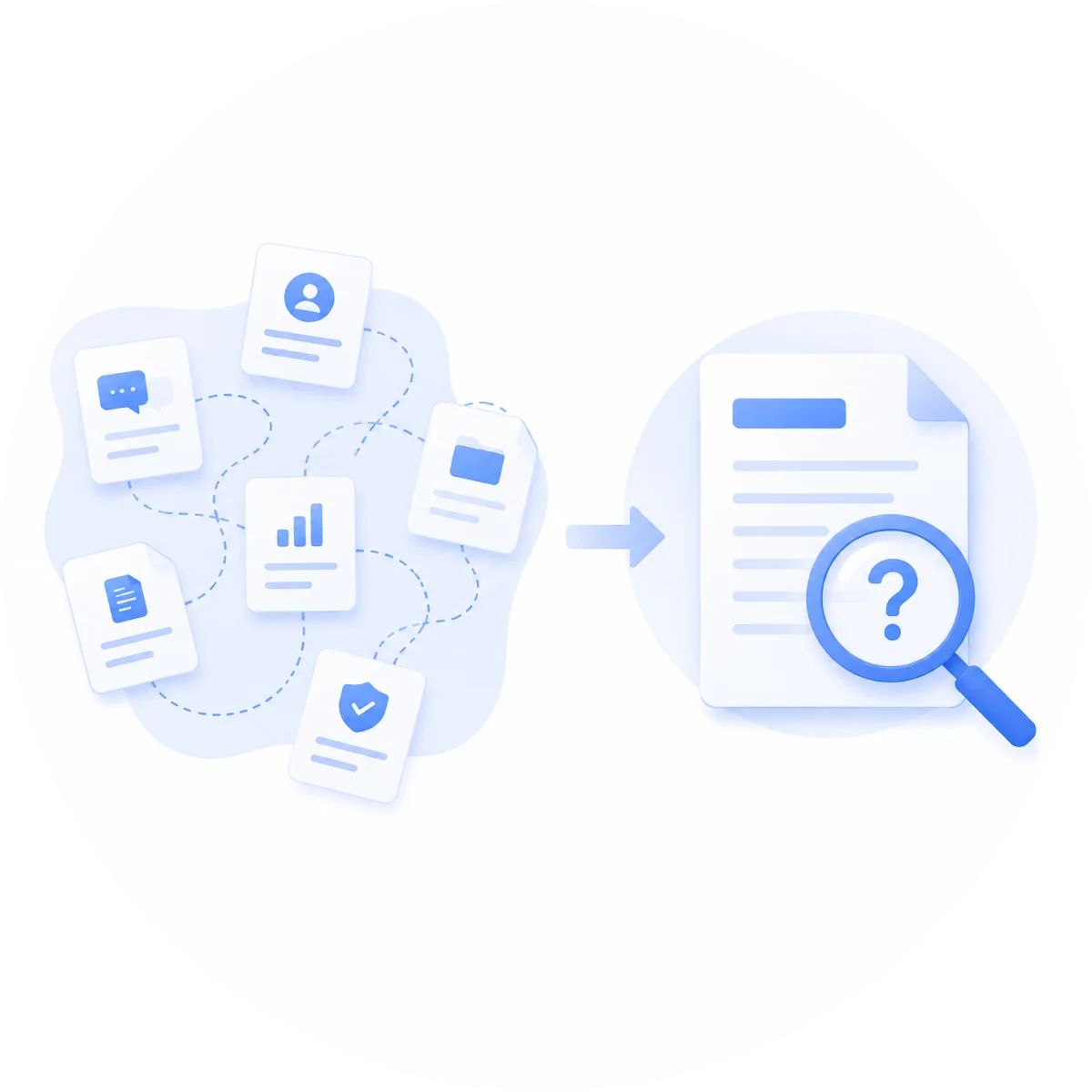
Important information is spread across too many systems
Client data may sit in the CRM. Meeting notes may live in one system. Modelling outputs may be stored elsewhere. Product information, pricing, compliance rules, and previous advice may be handled through separate tools.
When teams need to reconstruct the full story manually, document production becomes slow and error-prone.

02
Some sections take disproportionate effort
In financial advice, recommendation sections, summaries, justifications, and compliance-sensitive explanations often take the longest. These sections require judgement, context, and consistency.
Basic templates do not solve this because the hard work is not only writing. The hard work is knowing what should be written, why it matters, and how it connects to the client’s circumstances.

03
Document review often means reconstructing context
Compliance reviewers and QA teams often need to check the advice document against fact finds, CRM records, meeting notes, modelling outputs, strategy notes, and internal rules.
When the rationale is not clearly linked, review becomes a manual investigation rather than a structured validation process.
04
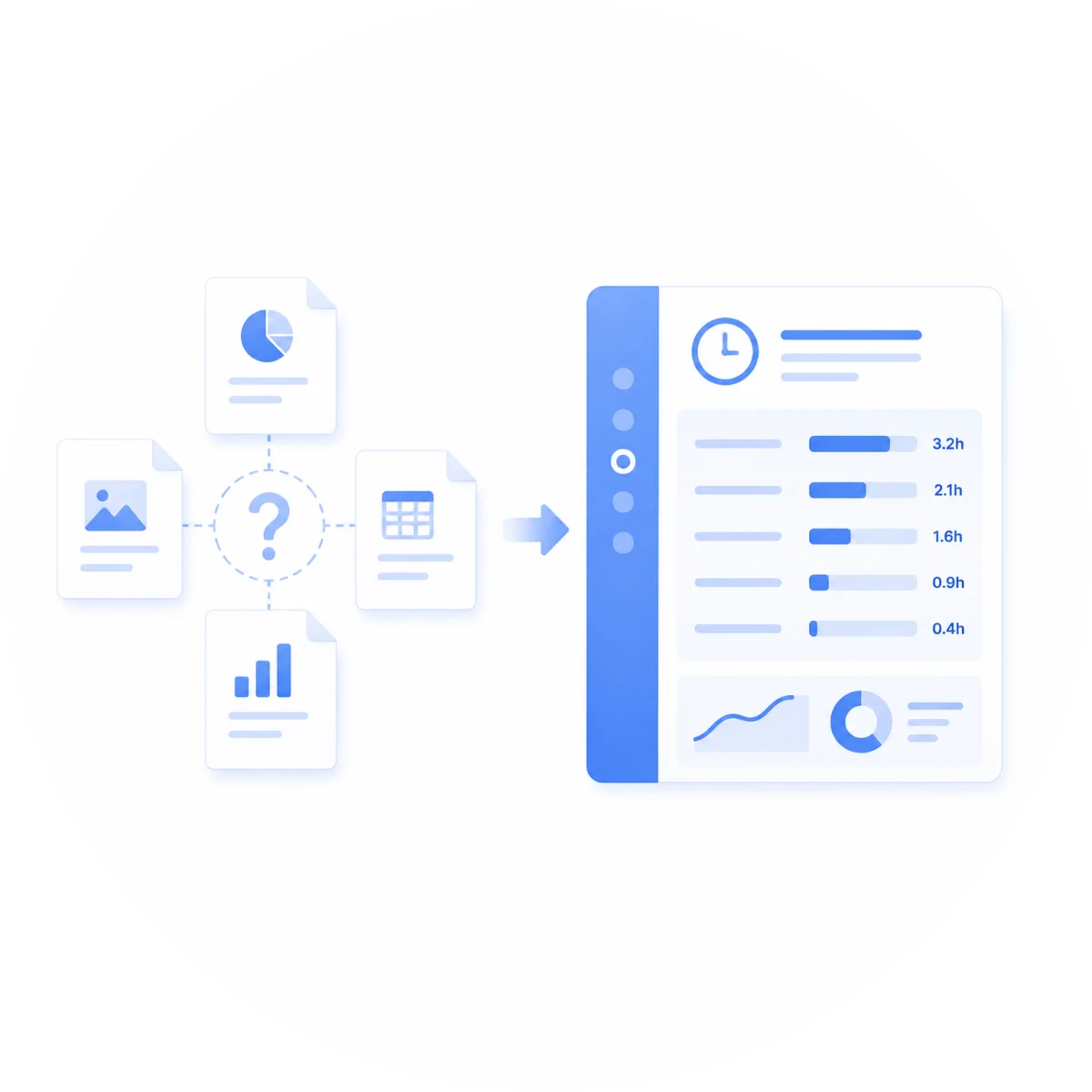
Teams know the work is slow but cannot always prove where time is lost
Many firms have a general sense of which documents are difficult, but they rarely have section-level evidence. Without that visibility, automation priorities are often based on perception rather than measured workflow effort.
What we build
We build AI-powered financial document automation systems that support document creation, processing, review, and continuous improvement.

AI document drafting
Generate structured first drafts, section content, summaries, recommendation text, and client-facing explanations using approved data sources and workflow context.
 Statements of Advice
- Records of Advice
- Client review documents
- Investment summaries
- Fund reports
- Disclosure documents
- Internal review notes
- Client communication packs
- And more.
The goal is not to remove human judgement: the goal is to reduce repetitive drafting and give advisers, paraplanners, and reviewers a stronger starting point.

Financial document processing automation
Convert unstructured or semi-structured financial documents into usable data.
- PDF extraction
- Form processing
- Client document intake
- Meeting note structuring
- Product data extraction
- Evidence file organisation
- Document classification
- Data validation workflows
This helps teams reduce copying, rekeying, and manual checking across document-heavy processes.

Financial document management system integration
A financial document management system becomes more useful when it connects properly with the rest of the workflow.
- CRM platforms
- Financial planning tools
- Client portals
- Open Banking providers
- Document management systems
- Compliance and audit tools
- Data warehouses
- Internal business applications
This helps teams keep documents connected to the data, decisions, and approvals that produced them.

Section-level document intelligence
This is where our approach goes beyond standard document automation.
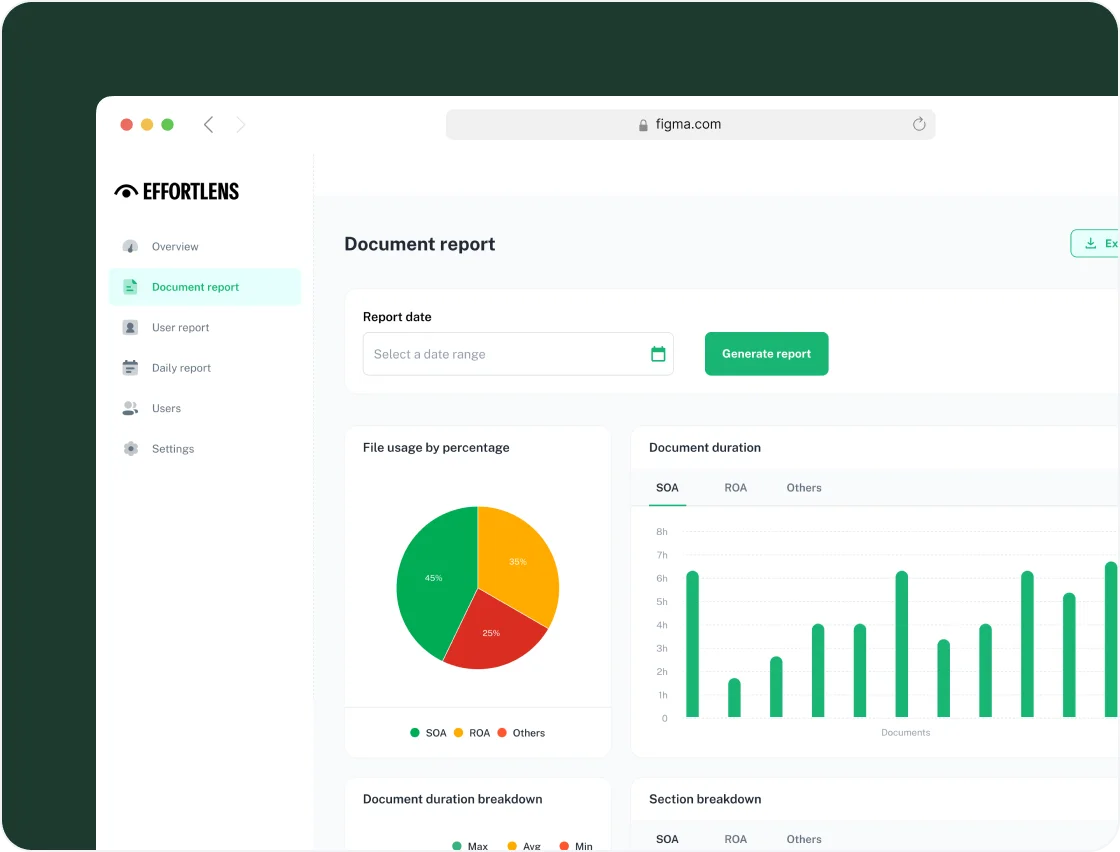
Using our Effort Lens approach, we can analyse document work at the section level. The system can identify which section is being worked on, understand the purpose of that section, detect where users spend the most time, and suggest opportunities to simplify, restructure, or automate specific parts of the workflow.
For example, the system may identify that advisers repeatedly revisit the recommendation section, that summaries require more manual editing than expected, or that compliance-sensitive sections create the most review friction.
Instead of optimising the whole workflow blindly, we focus on the exact parts that slow teams down.

Compliance-aware QA and validation
Financial document automation should support review quality, not bypass it.
- Check for missing information
- Compare document content against source data
- Identify inconsistencies between sections
- Flag unsupported recommendations
- Apply internal review rules
- Generate structured QA reports
- Create clearer evidence trails for review teams
Human review remains important, especially in regulated environments. AI helps make that review more consistent, structured, and easier to manage.
EffortLens for financial advice document workflows
Whitefox.cloud helped a leading financial advice platform redesign document-heavy workflows using AI, NLP, workflow analytics, and automation.
The client provided software for client fact-finding and specialist teams creating Statements of Advice and Review of Advice. Instead of relying only on stakeholder estimates, we analysed real document workflows. The results showed that some sections required far more effort than expected.
Recommendation sections, estimated at 1-2 hours, often took 3-4 hours. Summaries, expected to take 30 minutes, regularly required 1-2 hours. Compliance reviews also placed a significant workload on experienced QA managers.

Cut recommendation generation time from 2-4 hours to 15-45 minutes

Summary creation moved from 1-2 hours to a few minutes of human verification

Manual movement between tools and documents was reduced

QA checks became more structured and consistent

The client was able to redirect QA capacity toward higher-value client work
Finding a reliable and results-driven technology partner is exceptionally challenging. Amir, in his capacity as a fractional CTO, and the Whitefox.cloud team have consistently demonstrated speed, precision, and technical excellence. They have delivered iterative, cost-effective, and high-value software solutions aligned with our commercial objectives. In a highly regulated fintech environment, their innovative and compliance-aware execution of key technology initiatives has been exemplary. I can confidently endorse their innovation, capabilities, and partnership approach.

Matthew Esler
Co-founder & CEO of Padua Solutions
Common use cases
Here are some common use cases to this matter
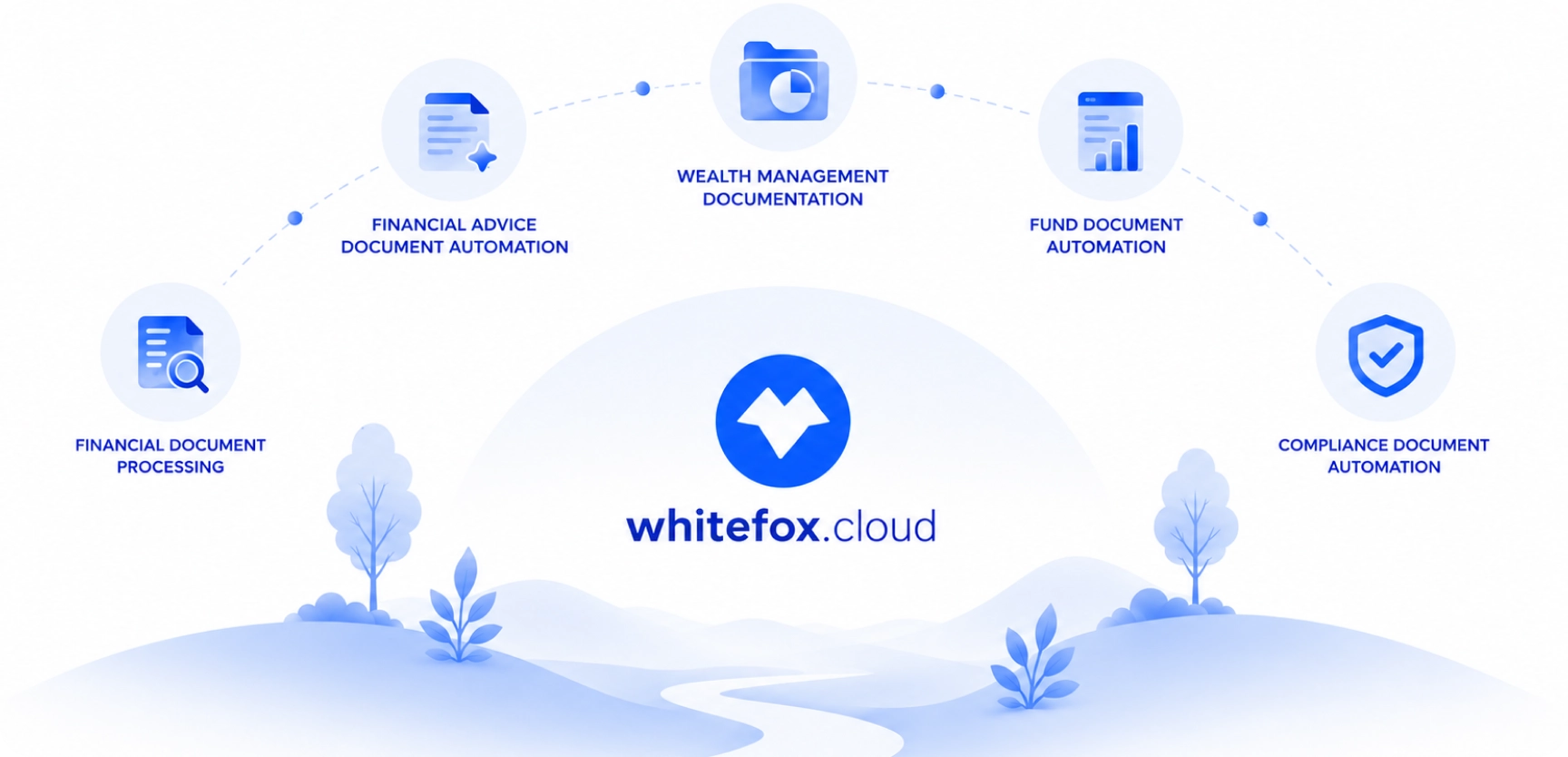
Approaches
What makes our approach different
We focus on effort, not only output
A draft that still needs heavy correction, context reconstruction, or compliance review has limited value. The better question is: where does document work actually slow down, and how can we reduce that effort safely?

Use cases
Why financial document automation matters now
Financial services teams are under pressure to produce more documentation, maintain stronger evidence trails, and reduce operational effort without lowering review quality.
For financial advice teams, this pressure is especially visible. Advisers, paraplanners, compliance teams, and operations teams often spend too much time moving between CRM records, meeting notes, modelling tools, product data, advice documents, and review checklists.
The issue is not only document volume. The bigger problem is document complexity.
A Statement of Advice, Record of Advice, client review pack, or investment report may depend on many connected inputs. If the data is fragmented, the logic is unclear, or the document workflow is inconsistent, automation alone can make documents faster to produce but harder to trust.
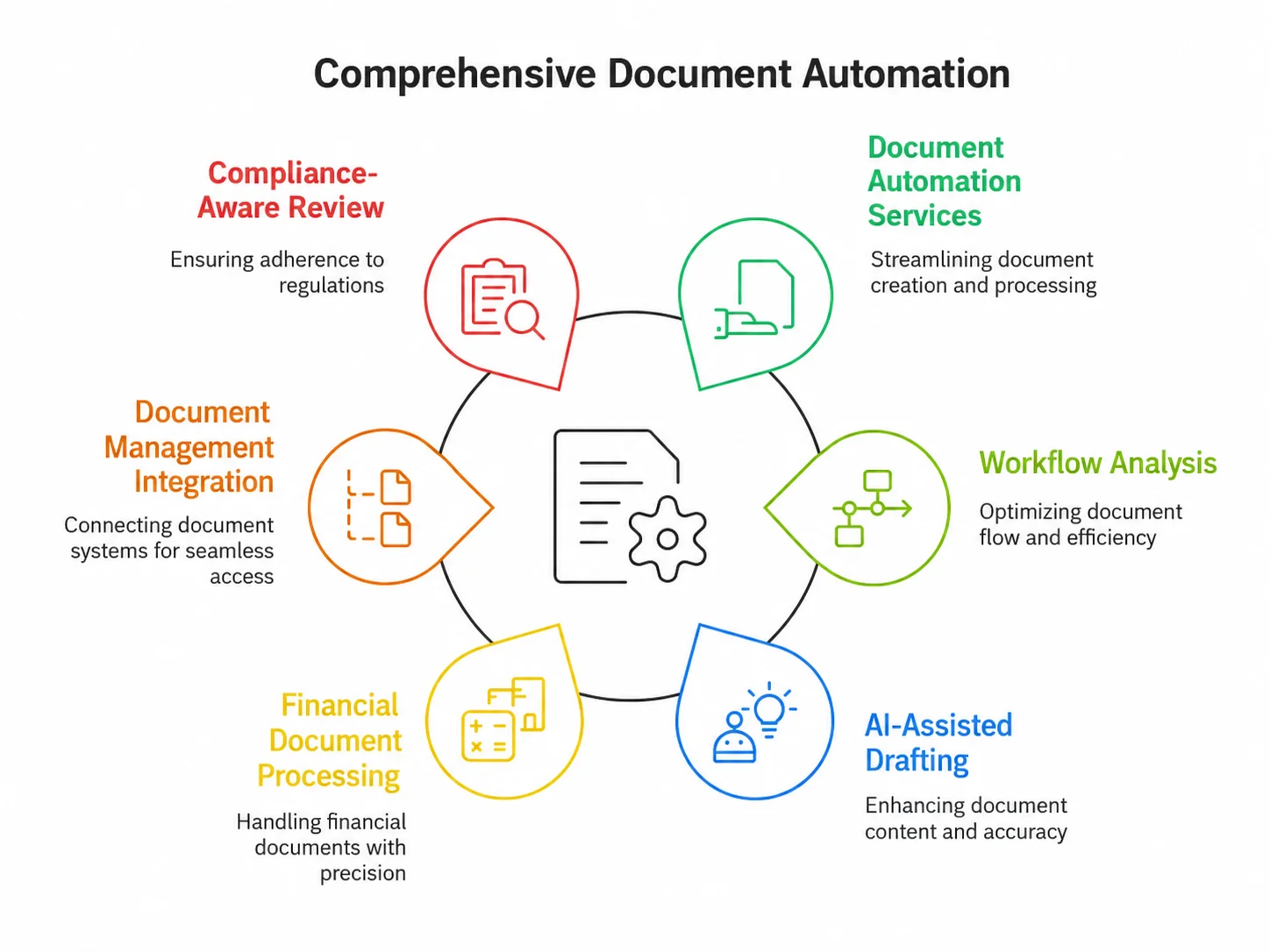
That is why our approach combines document automation services with workflow analysis, AI-assisted drafting, financial document processing, document management integration, and compliance-aware review logic.
When this makes sense
AI document automation may be a good fit if your organisation:
- Produces large volumes of structured financial documents
- Relies heavily on advisers, paraplanners, analysts, or operations teams for manual drafting
- Struggles with inconsistent document quality across teams
- Spends too much time reviewing documents for missing or unsupported information
- Needs better visibility into where document workflows slow down
- Wants to connect document automation with CRM, planning, data, or compliance systems
- Needs a custom solution rather than a generic document template tool


What is not included by default
AI document automation is powerful, but it should be implemented carefully. Our service does not include:
- A complete replacement for your compliance team
- Automatic cleaning of all historical data
- A ready-made document management system unless this is part of the agreed scope
- Full replacement of your existing CRM, financial planning software, or document repository
- A guarantee that every document will meet regulatory requirements without human review
Why Whitefox.cloud
Whitefox.cloud is an AI and software development partner with experience in financial services, fintech platforms, regulated workflows, and AI-enabled automation.

We bring technical delivery, financial workflow understanding, and practical implementation experience together. That combination matters when AI needs to work inside real financial services operations.

Talk to our AI document automation team
If your team is spending too much time creating, reviewing, or correcting financial documents, we can help you identify where the effort is really going and design a practical automation roadmap.
Learn more about our fintech services and insights
If your project connects financial document automation with wider fintech, AI, workflow, or integration needs, these pages may also be useful.


