Custom insurance software development services
Build insurance platforms that adapt as your products, rules, and distribution channels change
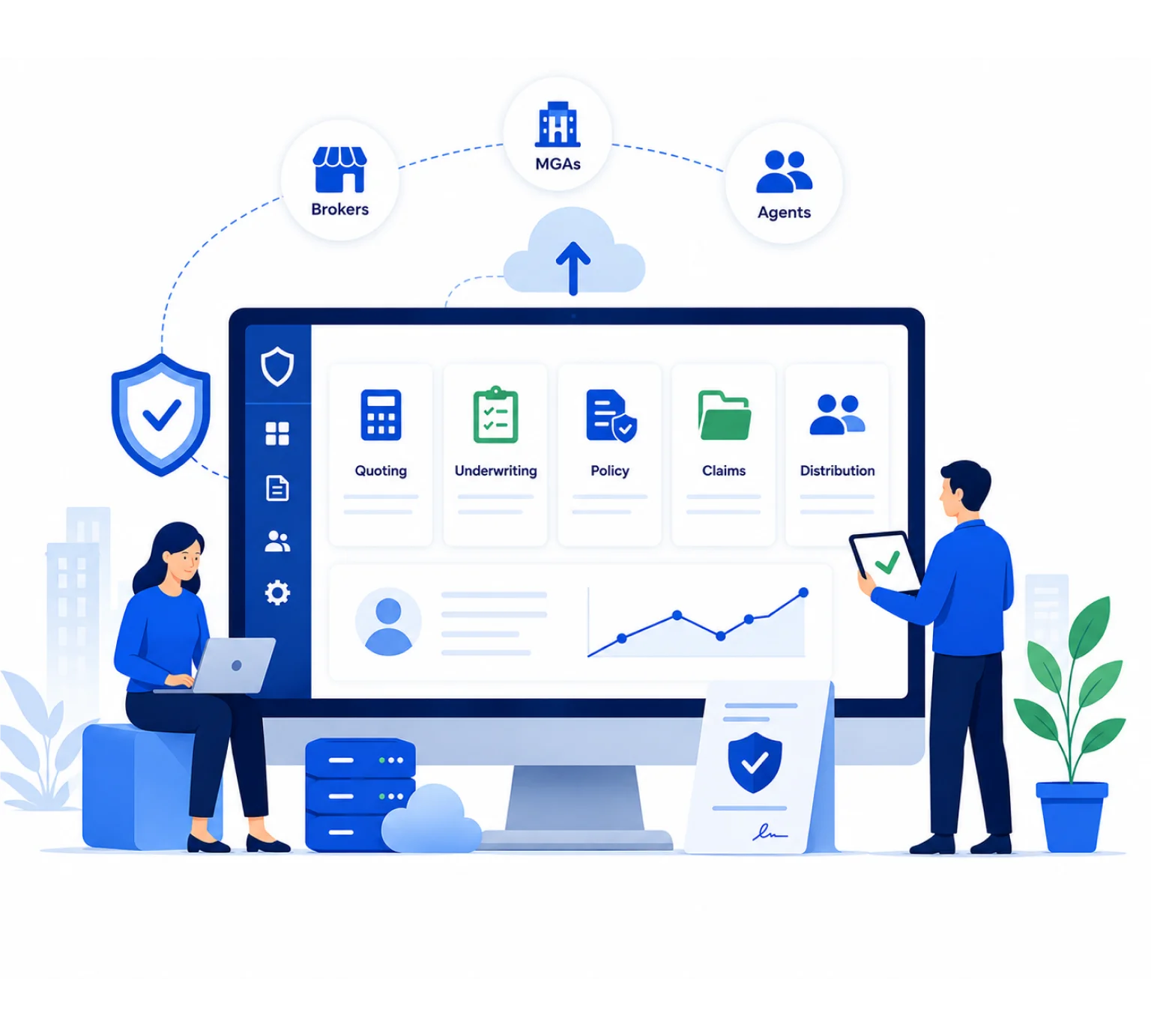
We design and develop quoting, underwriting, policy, claims, and distribution software for insurers, MGAs, brokers, and insuretech companies.
From a focused workflow to a cloud-native insurance platform, we help you build around your operational model rather than force it into restrictive software.

100+ software projects

50+ integrations

AWS-certified expertise
Insurance platform
development for
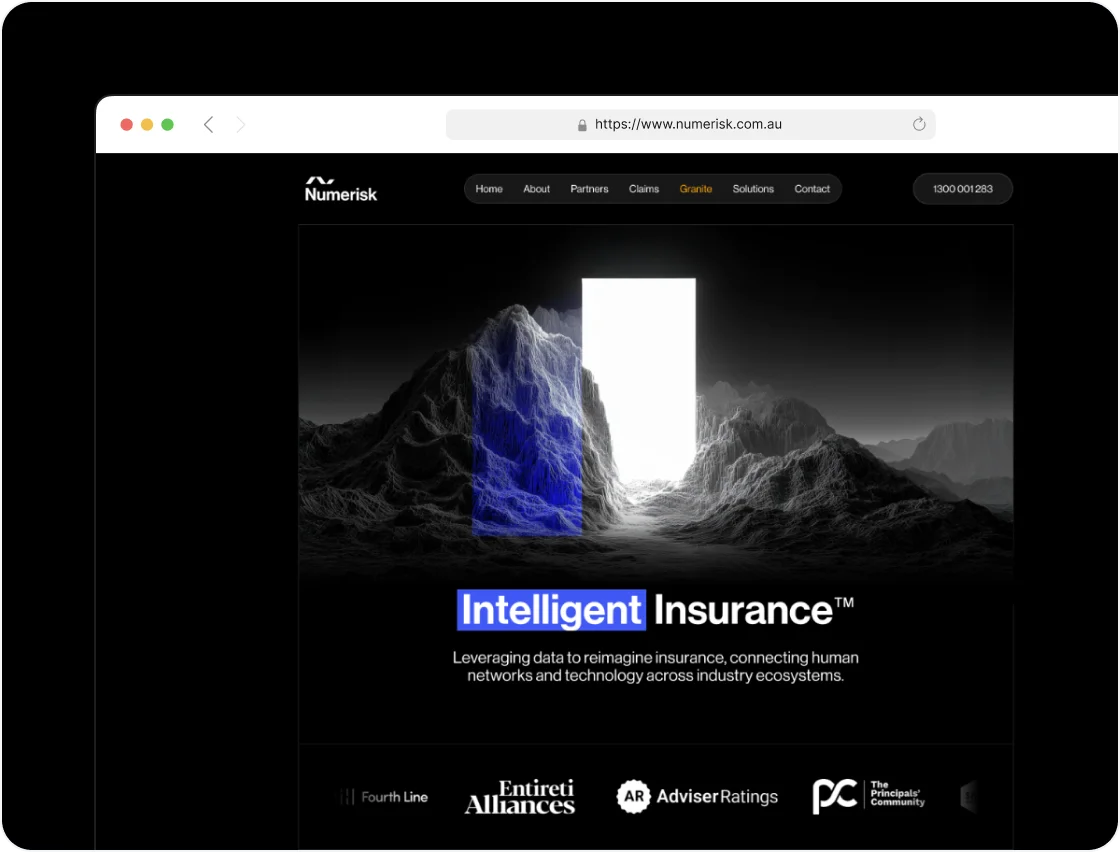
Numerisk
See how we built the NumeriskSee how we built the Numerisk platform about Numerisk case study

The challenge
Build a secure insurance distribution platform that could support quoting, underwriting referrals, policy management, and multiple distribution journeys.

What we built
A cloud-native, API-driven platform hosted in AWS Sydney, with separate Dev, UAT, and Prod environments.

The result
Numerisk can introduce products and update underwriting logic through a modular architecture without rebuilding the core platform.

Richard Silberman
CEO Numerisk

“Whitefox.cloud has been an outstanding partner.”
What we solve
Insurance technology challenges we solve
We build the architecture around these operational problems, connecting the customer journey with the rules, integrations, data, and internal workflows behind it.

Product changes take too long
Underwriting rules and pricing logic are tightly connected to legacy systems, making even small changes dependent on development work.

Quoting is fragmented
Pricing, eligibility, disclosures, referrals, and customer information sit across several tools.

Teams rely on manual handovers
Underwriting referrals, claims exceptions, and policy changes move through email and spreadsheets.

Distribution is difficult to scale
Broker, distributor, and direct-to-customer journeys require different workflows that the core platform may not support.

Decision histories are difficult to reconstruct
Teams need visibility into which rules, documents, approvals, and data were involved in a decision.

Talk to our technical team in Australia about your insurance software project.
Evidence for smarter insurance workflows
More underwriting capacity
GenAI-enabled automation could increase underwriting capacity by 35%, according to EY. It can support document review, case preparation, and information retrieval while underwriters retain decision ownership.
Customer satisfaction
Capgemini found customer satisfaction in insurance was 53%. Better portals and connected workflows can make quotes, policy updates, claims, and document access easier for customers.
Insurance software built around operational reality
Insurance products are more complex than digital forms and customer portals.
Behind every quote, policy, claim, or renewal sits a network of rules, approvals, integrations, disclosures, documents, customer decisions, compliance controls, and operational exceptions.
This is why generic software often becomes restrictive as insurance products grow.
A new underwriting rule requires a workaround. Distributor processes sit outside the main platform. Claims teams maintain separate spreadsheets. Customers cannot complete key actions without contacting support. Product changes require developers to modify tightly connected systems.
Our insurance software development services focus on the operational structure behind the platform.
Our insurance software development services

Insurance platform development
We build modular insurance platforms that bring quoting, underwriting, policy management, customer workflows, and internal operations into one connected architecture.
 Insurance product configuration
- Quote creation and management
- Underwriting rules
- Referral workflows
- Policy binding
- Document generation
- Renewals and adjustments
- Customer and distributor portals
- Audit event logging
- Internal operations dashboards
- Reporting and monitoring
- Third-party integrations
A modular architecture makes it easier to introduce new products, distribution channels, workflows, or integrations without repeatedly rebuilding the core platform.

Insurance quoting software development
Quoting workflows often become difficult to manage because pricing rules, disclosures, eligibility requirements, risk inputs, and referral conditions are distributed across several systems.
- Distributor-led quote initiation
- Direct customer quoting
- Dynamic question flows
- Eligibility checks
- Product-specific pricing logic
- Underwriting referrals
- Quote comparison
- Disclosure presentation
- Consent capture
- Quote-to-bind workflows
- Document creation
- Quote status tracking
The goal is to create a clear and traceable quoting process for customers, distributors, underwriters, and internal teams.

Underwriting software development
Underwriting software needs to handle both standard cases and the exceptions that require human judgement.
- Configurable underwriting rules
- Automatic approvals
- Referral thresholds
- Risk scoring inputs
- Manual review workflows
- Decision notes
- Rule version control
- Evidence and document collection
- Decision traceability
- Role-based access
- Escalation pathways
- Integration with external data providers
Rules can evolve as products change, without losing visibility into which logic was used for earlier decisions.

Policy administration systems
We develop systems that support the full policy lifecycle, from the original quote through binding, renewal, adjustment, and cancellation.
- Policy creation
- Policy document generation
- Coverage management
- Endorsements and amendments
- Mid-term adjustments
- Renewal workflows
- Cancellation handling
- Payment status integration
- Customer communications
- Policy history
- Event logging
- Internal review and approval
This creates a more consistent operational record and reduces reliance on disconnected systems.

Claims management software
Claims workflows need to balance speed, customer communication, evidence collection, assessment, fraud controls, approvals, and financial processes.
- Digital claim submission
- Evidence and document upload
- Claim triage
- Case assignment
- Assessment workflows
- Internal notes
- Status tracking
- Customer notifications
- Payment approvals
- External provider integrations
- Fraud and anomaly indicators
- Audit history
- Reporting and operational dashboards
We can build a complete claims platform or improve a specific part of an existing workflow.

Insurance portal software development services
We build secure portals for customers, brokers, distributors, employers, healthcare providers, and internal insurance teams.
- Request and manage quotes
- Complete application forms
- Review disclosures
- Bind policies
- Upload documents
- View policy information
- Submit claims
- Track claim progress
- Update personal or business details
- Review renewal information
- Download policy documents
- Communicate with support or operations teams
Internal and distributor portals can also include role-specific dashboards, referrals, approvals, portfolio views, product access, and operational reporting.

Insurance API development and integrations
Insurance platforms rarely operate independently. They often integrate with payment, identity, CRM, accounting, document, healthcare, and legacy systems.
- Payment platforms
- Customer relationship management systems
- Identity and authentication providers
- Document generation and e-signature tools
- Accounting and finance systems
- Data enrichment providers
- Risk and fraud services
- Broker and distributor systems
- Policy administration platforms
- Claims partners
- Healthcare systems
- Internal data warehouses
- Reporting tools
APIs move information between systems, but integration work also requires data mapping, error handling, access controls, monitoring, and agreement on which system owns each part of the data.

AI for insurance workflows
AI can help insurance teams process information, analyse documents, support decisions, and reduce repetitive administrative work.
- Document classification and extraction
- Claim document summaries
- Underwriting file preparation
- Policy comparison
- Customer enquiry classification
- Internal knowledge assistants
- Referral case summaries
- Quality assurance support
- Anomaly detection
- Workflow bottleneck analysis
- Draft customer communications
- Operational reporting
AI systems should fit into defined workflows with appropriate review, access control, monitoring, and human ownership.
We begin by examining the workflow and identifying where AI can create a measurable operational improvement. This avoids automating inefficient processes or introducing AI where a simpler rule-based system would be more reliable.
Financial and insurance software development services
Insurance products frequently connect with financial infrastructure. Premium collection, commission calculations, refunds, distributor payments, claims payments, reconciliation, and reporting all depend on accurate financial workflows.
Our financial & insurance software development services can include:
- Payment integrations
- Premium collection workflows
- Billing and invoicing
- Commission calculation
- Claims payment approval
- Refund management
- Transaction reconciliation
- Financial reporting
- Open Banking integrations
- Accounting system integrations
- Role-based financial approvals
- Audit records
Our experience across fintech and insurance helps us approach these workflows as connected operational systems rather than isolated software features.
Health and medical insurance software development services
Health insurance platforms need to manage sensitive information, complex eligibility rules, provider relationships, claims data, customer consent, and integration with healthcare systems.
Our health insurance software development services can support:
- Member portals
- Health insurance quoting
- Eligibility and coverage checks
- Policy and plan management
- Claims submission
- Provider workflows
- Pre-authorisation processes
- Document collection
- Member communications
- Consent management
- Healthcare data integrations
- Reporting and audit controls
Our healthcare interoperability experience is particularly useful where insurance workflows need to exchange information with clinics, providers, healthcare applications, or clinical data systems.
Medical insurance software development services may also involve healthcare terminology, inconsistent data structures, identity matching, privacy controls, and integration with older systems.
These challenges need to be addressed as part of the architecture, not treated as a final integration task.
Who we work with
We work with startups building their first insurance product as well as established organisations modernising specific systems or workflows.

When custom insurance
software makes sense
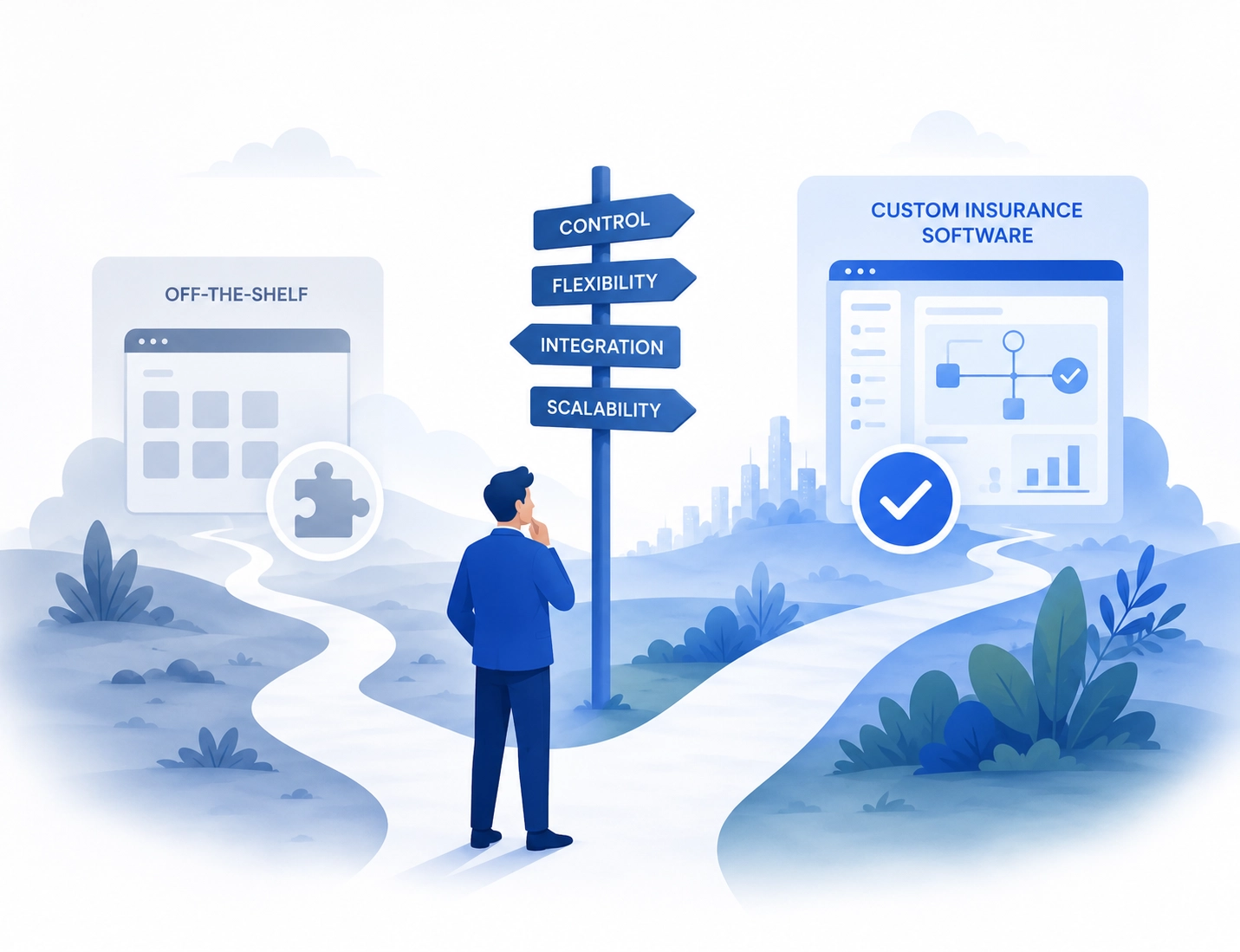
Custom software requires more upfront planning and investment than an off-the-shelf product. It gives you greater control over workflows, architecture, integrations, and product development priorities.
- Your product requires specialised underwriting logic
- Existing platforms restrict product configuration
- You need several distribution models
- Broker or distributor workflows are fragmented
- Customer self-service is limited
- Teams rely heavily on spreadsheets and manual handovers
- Claims or policy operations involve too many disconnected systems
- You need control over architecture and intellectual property
- A legacy platform is slowing product development
- Several systems need to exchange information
- Audit and decision records are difficult to reconstruct
- You need to introduce AI into a controlled workflow
Insurance software development costs
The cost of insurance software development depends on the product scope, underwriting complexity, user journeys, integrations, security requirements, cloud infrastructure, migration needs, and level of product configurability.

A focused broker portal or workflow application may sit toward the lower end of the range. A multi-product insurance platform with quoting, underwriting, policy administration, claims, integrations, migration, and several user portals will require a larger investment.
Timelines typically range from 2 months for a focused initial product to 36 months for complex platform programmes.
We provide a detailed estimate after reviewing the workflows, architecture, priorities, and delivery risks.
Why work with Whitefox.cloud?
We are an insurance software development services company with practical experience in insurance platforms, fintech, healthcare interoperability, AI workflow automation, cloud infrastructure, and regulated software environments.
Our advantage is not limited to technical implementation.
We understand how insurance workflows break down in practice: rules become difficult to update, referrals sit in inboxes, distributors lack visibility, customer journeys stop halfway, and teams struggle to reconstruct why a policy decision was made.
We use a workflow-first approach.
Before building, we examine how the insurance product needs to operate, which decisions the system must support, which information needs to move between users and systems, and where human review remains necessary.
This creates a stronger foundation for architecture, automation, integrations, and product development.

Build your insurance platform with Whitefox.cloud
You may be launching a new insurance product, replacing a restrictive legacy system, creating a distributor portal, modernising claims operations, or introducing AI into an existing workflow.
We can help you define the architecture, prioritise the first release, build the platform, integrate it with existing systems, and support its continued development.
Talk to our team about your insurance software requirements.
