How We Built an AI Tool for Healthcare Compliance:
From Evidence Review to Audit Readiness
From Evidence Review to Audit Readiness
AI in healthcare compliance is most useful when it is connected to real evidence, audit requirements and remediation workflows. This case study explains how Whitefox.cloude designed and developed an AI tool that helps healthcare providers assess evidence, identify compliance gaps and improve audit readiness.
The Challenge
The Audit Readiness Problem We Set Out to Solve
Healthcare providers operate in environments where compliance is not optional, but managing it is often harder than it should be.
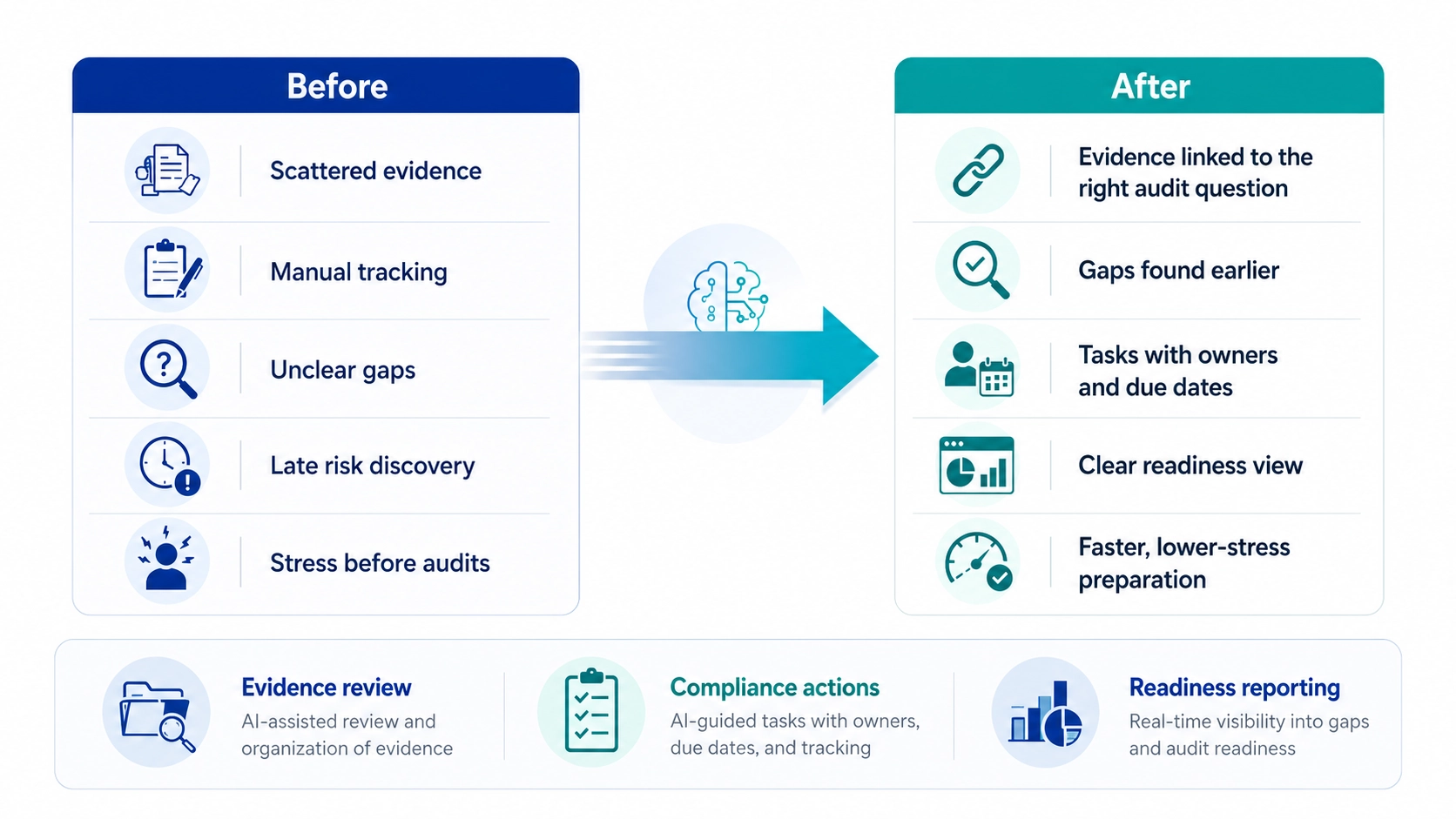
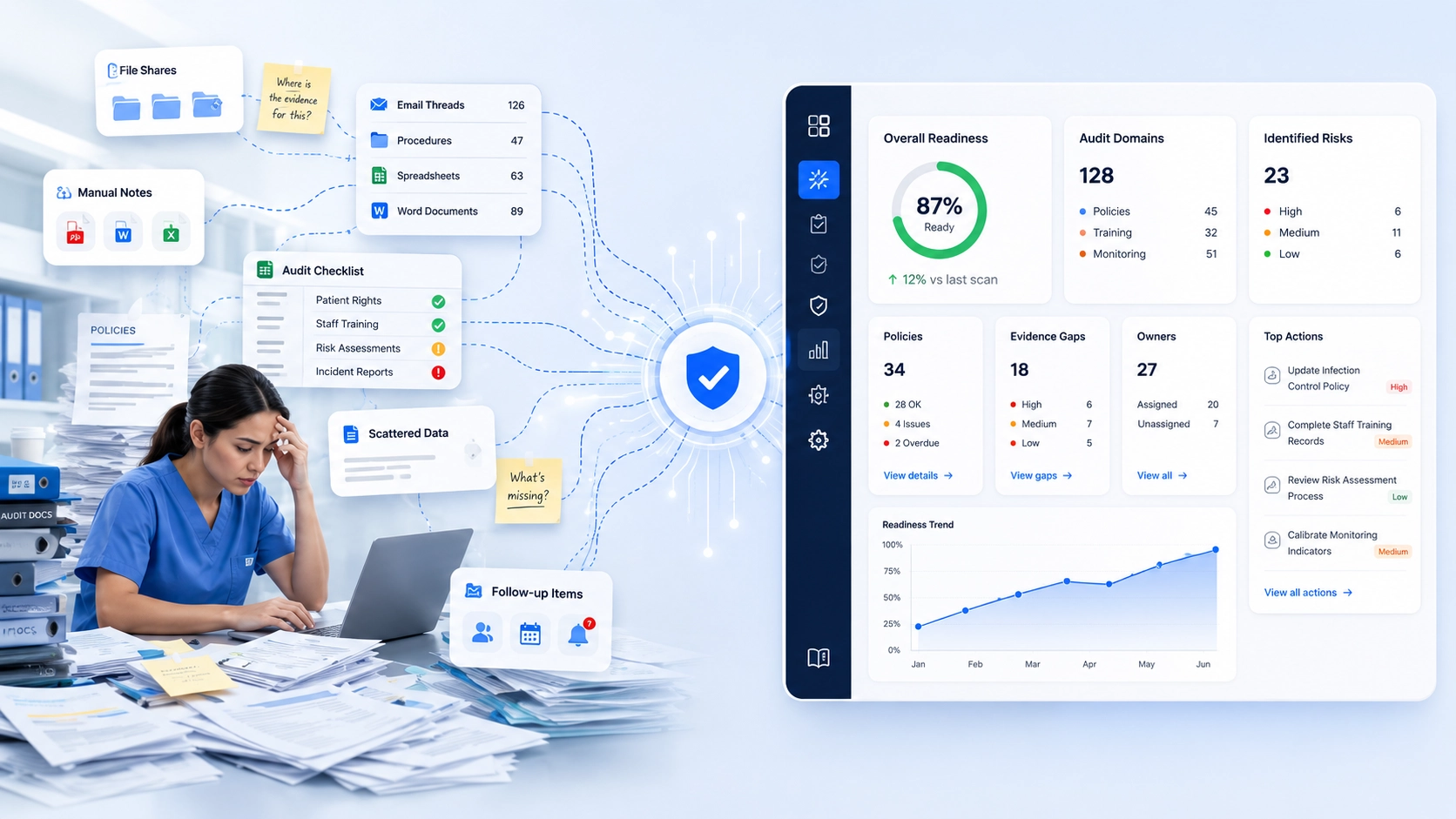
Policies may sit in one folder, evidence in another, audit actions in a spreadsheet, and follow-ups in someone’s inbox. As an audit approaches, teams spend valuable time finding documents, checking whether evidence is sufficient, chasing unfinished work, and trying to identify issues before an auditor does.
For small providers, much of this responsibility may sit with the business owner. As the organisation grows, the work spreads across administrators, operations teams, managers, and compliance staff.
The central problem remains the same:
How does a provider know whether it is actually ready for an audit?
Many existing tools help organisations store documents or complete checklists, but do not help them determine whether their evidence satisfies a specific audit requirement.
This leaves teams answering difficult questions manually:
Which requirements apply to our services?
Do we have the right evidence?
Is the evidence complete?
Which gaps create the greatest risk?
Who is responsible for resolving each issue?
What still needs to be completed before the audit?
NDIS providers are one example. Their compliance obligations are influenced by the services and registration groups relevant to their business. Other healthcare and care-based providers face similar challenges across accreditation standards, clinical governance, quality systems, and operational controls.
Many healthcare compliance AI tools focus on document storage, generic question answering or checklist completion. The harder problem is assessing evidence against a specific requirement and then connecting the outcome to a controlled remediation workflow.
The Vision
From Reactive Audit Preparation to Continuous Readiness
Our goal was to replace last-minute audit preparation with an ongoing readiness process.
The platform needed to help providers:
Understand which requirements apply to their business.
Work through relevant audit questions.
Understand what evidence is expected.
Review evidence against each requirement.
Identify conformity and non-conformity.
Turn gaps into assigned actions.
Track remediation through to completion.
See where the organisation stands.
This turns compliance from a static checklist into an active workflow that helps providers understand gaps and decide what should happen next.
Our Solution
Designing AI Around Real User Decisions
A useful AI workflow must support a clear user decision and trigger a meaningful product action.
During an internal audit, a provider may need to:
Upload evidence now.
Upload it later.
Assign the work to another team member.
Ask for further explanation.
Confirm that compliance was verified elsewhere.
Create an action to resolve a gap.
The system therefore needs to understand the current audit question, the provider’s response, the available evidence, the status of the finding and the next appropriate action.
The solution was designed to be:
Context-aware
The experience is shaped by the provider’s services, business profile and applicable compliance areas.
For an NDIS provider, registration groups help determine which audits, documents and requirements are relevant.
Evidence-aware
Documents are reviewed against a specific audit requirement rather than treated as generic files.
This helps the provider understand whether the evidence supports the requirement and what may still be missing.
Action-oriented
When a gap is identified, the system can create a compliance action with an owner, due date, priority, status and link to the original audit item.
Human-reviewable
The provider remains in control.
Users can review the outcome, ask for clarification, upload additional evidence, defer the work, assign it or dismiss the task where compliance has already been confirmed.
Product-integrated
Review outcomes update the wider workflow, including audit findings, non-conformities, tasks, dashboard indicators and internal reports.
This turns AI from a standalone interaction into part of the organisation’s compliance process.
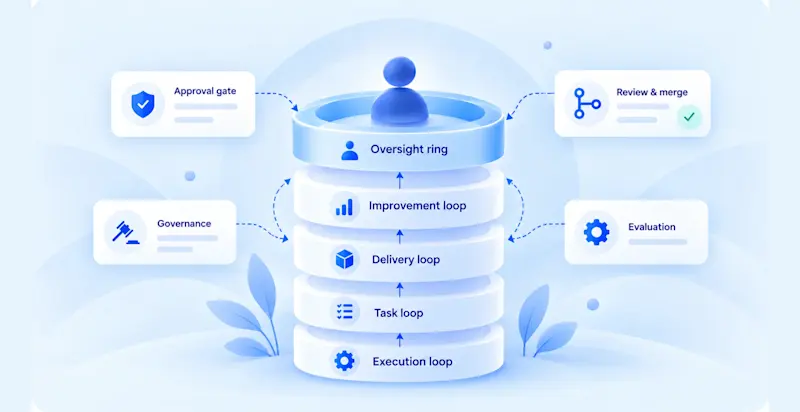
The result was an AI healthcare compliance platform designed around evidence assessment, human review and accountable follow-up actions.
How it works
Closing the Loop Between Findings and Remediation
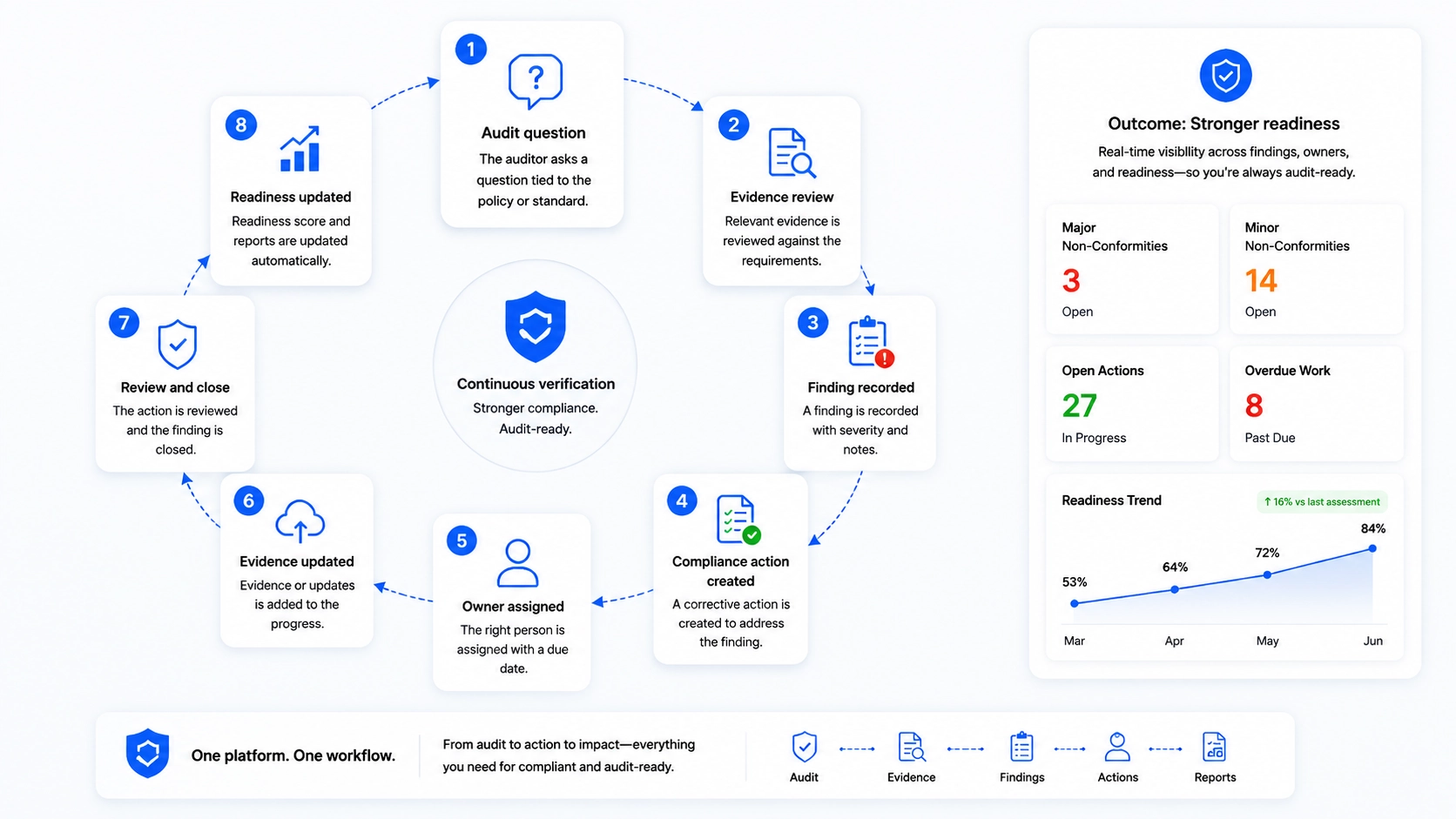
Identifying a compliance gap is only useful if the organisation can resolve it.
In manual processes, findings are often recorded in spreadsheets, meeting notes or emails, separating them from the evidence and audit requirements that created them.
The platform keeps these elements connected:
A finding is recorded against the audit question.
Its severity is identified.
A compliance action is created.
The task is assigned to the right person.
Evidence is uploaded when the work is complete.
The task and finding are reviewed and closed.
The provider’s readiness view is updated.
For a sole provider, this becomes a structured personal action plan. For a larger provider, it creates accountability across managers, administrators and operational teams.
Making Risk Visible Earlier
A provider may have completed most requirements while still having a major non-conformity that could affect the audit outcome.
The dashboard therefore shows more than an overall compliance percentage. It surfaces major and minor non-conformities, open actions, overdue work, audits in progress, upcoming audits and changes in readiness over time.
This gives providers a practical answer to an important question:
What should we fix first?
Approach
What This Project Demonstrates About AI in Healthcare Compliance
Effective AI products require a clear understanding of:
The business process.
The decisions users need to make.
The data and evidence involved.
Where human judgement is required.
How AI outputs affect downstream workflows.
How users can review, correct or override results.
The technical implementation matters, but the larger challenge is product and workflow design.
Every AI-assisted step needs enough context, a clear purpose, controlled user choices, predictable downstream behaviour and appropriate human oversight.
These principles apply beyond healthcare compliance. Similar patterns exist in financial services, logistics, insurance, quality management, operational risk, document review and approval workflows.
The Outcome
A Clearer Path to Audit Readiness
By connecting audits, evidence, findings, tasks and reports, the platform gives providers an ongoing view of their readiness.
Providers can assess evidence earlier, identify risks sooner and track remediation without rebuilding the process before every audit.
This means:
Less time spent searching through folders and spreadsheets.
Fewer missed actions.
Clearer accountability.
Earlier visibility of serious compliance risks.
Greater confidence about what remains to be done.
The project also demonstrated our team’s ability to design AI workflows that are practical, explainable and integrated into real business operations.
This project focused on healthcare AI compliance workflows that help providers manage audit requirements; it was not designed to assess the regulatory compliance of clinical AI systems themselves.
Conclusion
AI Workflow Automation for Your Company
This project is one example of how AI can be embedded into real business workflows to improve compliance, reduce manual effort, and help teams make better decisions.
Whitefox.cloud designs and develops AI-powered workflows across healthcare, financial services, logistics, compliance, and other industries. Whether you need AI-assisted audits, evidence reviews, compliance tracking, document workflows, or operational process automation, we can help identify where AI can deliver the greatest impact and build a solution tailored to your business.
Contact us to discuss your project, or learn more about our AI development services.